Buy alpamayo.eu ?
We are moving the project
alpamayo.eu .
Are you interested in purchasing the domain
alpamayo.eu ?
domain@kv-gmbh.de · 0541-91531010
Buy alpamayo.eu ?
'Will + participle 2?'
"Will + participle 2" is a construction used to form the future perfect tense in English. It is used to indicate an action that will be completed before a specific point in the future. This construction is formed by using the auxiliary verb "will" followed by the past participle of the main verb. For example, "By the time you arrive, I will have finished my homework." **
What are the Latin forms of the present participle, perfect passive participle, and future active participle?
The Latin present participle is formed by adding -ns, -ntis to the present stem of the verb. For example, the present participle of the verb "amo" (I love) is "amans, amantis" (loving). The perfect passive participle is formed by adding -us, -a, -um to the verb stem. For example, the perfect passive participle of the verb "amo" is "amatus, amata, amatum" (loved). The future active participle is formed by adding -urus, -ura, -urum to the verb stem. For example, the future active participle of the verb "amo" is "amaturus, amatura, amaturum" (about to love). **


Similar search terms for Participle
Top-Angebote
Products related to Participle:
-
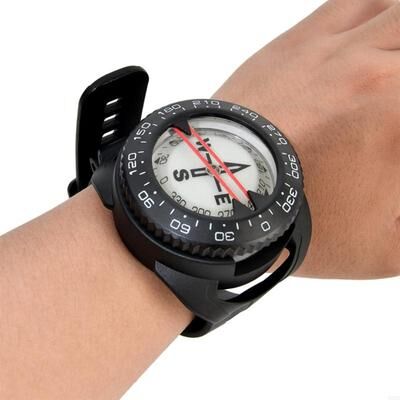
ModernMart Adventure Waterproof Compass Watch For Hiking Navigation And Outdoor Survival Adventure Waterproof Compass Watch For Hiking Navigation And Outdoor SurvivalNever lose your sense of direction, even in the wild. This compass watch is built for explorers, hikers, and outdoor enthusiasts who need reliable navigation on the go. Designed as a rugged outdoor survival watch, it combines precision direction...79,97 $*Shipping: 0,00 $Secure redirect to the provider
-
ModernMart EDC Outdoor Survival Compass Watch Bracelet For Hiking & Climbing EDC Outdoor Survival Compass Watch Bracelet For Hiking & ClimbingNever lose your way on your next adventure with the EDC Outdoor Survival Compass Watch. Designed for hikers, climbers, and outdoor enthusiasts, this compact, lightweight tool keeps you on track and on time. Its durable, waterproof design glows in...34,97 $*Shipping: 0,00 $Secure redirect to the provider
-
Perfect Picks Market Kids Explorer Kit, Bug Catcher, Binoculars, Outdoor Exploration Kit For Hiking, Camping, Educational Toy For Kids Kids Explorer Kit, Bug Catcher, Binoculars, Outdoor Exploration Kit For Hiking, Camping, Educational Toy For KidsExplore the Outdoors with the 11PCS Kids Explorer Kit The 11PCS Kids Explorer Kit with Binoculars is the perfect set for your little adventurer. Designed to spark curiosity, this bug catcher outdoor exploration kit includes everything kids need for...129,97 $*Shipping: 0,00 $Secure redirect to the provider
-
Orion Strangeworlds Travel Agency: Adventure in the Floating Mountains by L.D. Lapinski – World Book Day AdventureIt is the once-every-century Cloud-Wish Festival in the magical world of Strofadia, and Flick and Jonathan have travelled via suitcase to be a part of it.Strofadia is a land of flight and fantasy, where the people are born with wings and the great floating mountains are seen as the source of fantastic power. There are three floating mountains, with the largest being known as the home of the great Cloud Dragon - keeper of magic and granter of wishes. The people of Strofadia take their magical wishes (in the form of a physical bead-like object) to the dragon, in the hopes that the wish will be granted at the end of the festival when the dragon appears.Flick and Jonathan have fun exploring Strofadia, but when the moons rise, there is no sign of movement from the mountain.Will Flick and Jonathan be able to find out what happened to the dragon and save the festival and the land of Strofadia from disaster?A 2023 World Book Day Title0,99 £*Shipping: 1,99 £Secure redirect to the provider



-
What are participle clauses?
Participle clauses are a type of clause that uses a present participle (-ing form) or a past participle (-ed form) to provide additional information about the subject of the main clause. They can be used to show simultaneous actions, cause and effect, or to provide descriptive details. For example, in the sentence "Feeling tired, she decided to go to bed," the participle clause "Feeling tired" provides additional information about the subject "she." **
-
What is a participle?
A participle is a form of a verb that can function as an adjective or be part of a verb phrase. There are two types of participles in English: the present participle, which ends in -ing (e.g. "walking"), and the past participle, which can end in -ed, -en, -d, -t, -n, or -ne (e.g. "broken"). Participles are used to modify nouns or pronouns, and they can also be used to form verb tenses such as the present perfect or past perfect. **
-
What is the difference between the past participle and the present participle?
The past participle is a verb form used to indicate a completed action or state that occurred in the past. It is often used with auxiliary verbs to form the perfect tenses (e.g., "has eaten," "had gone"). The present participle, on the other hand, is a verb form used to indicate an ongoing action or state in the present or future. It is formed by adding "-ing" to the base form of the verb and is used to create the progressive tenses (e.g., "is eating," "will be going"). **
-
How can the terms premature, simultaneous, and subsequent be explained in relation to past participle, present participle, and future participle?
The terms premature, simultaneous, and subsequent can be explained in relation to past participle, present participle, and future participle based on their timing in relation to the action of the verb. The past participle refers to an action that has already been completed, making it premature in relation to the present moment. The present participle refers to an action that is happening at the same time as something else, making it simultaneous. The future participle refers to an action that will happen at a later time, making it subsequent to the present moment. These terms help to clarify the timing of the action in relation to the verb. **

What is a nominalized participle?
A nominalized participle is a verb form that has been turned into a noun. This is done by adding a suffix to the participle form of the verb, which allows it to function as a noun in a sentence. Nominalized participles are commonly used in various languages to express actions or qualities in a more abstract or general way. **
What is a substantivized participle?
A substantivized participle is a verb form that has been turned into a noun by adding a definite article and declining it for case, gender, and number. In other words, it is a participle that has been transformed into a noun and can function as a subject, object, or complement in a sentence. This process allows the participle to take on the characteristics of a noun while still retaining some of its verbal qualities. **
Top-Angebote
Products related to Participle:
-
The Handy Homestead Survival Wrist Compass Watch For Outdoor Adventure & Hiking Survival Wrist Compass Watch For Outdoor Adventure & HikingNever lose your way on your adventures again. The wrist compass watch combines a reliable compass with a durable, lightweight design, perfect for explorers, hikers, and outdoor enthusiasts. Built for precision and convenience, it keeps you oriented...39,97 $*Shipping: 0,00 $Secure redirect to the provider
-
Uplifted Trends Premium Wrist Compass Survival Watch For Outdoor Adventure & Hiking Premium Wrist Compass Survival Watch For Outdoor Adventure & HikingNever lose your way again with the wrist compass survival watch built for adventurers and explorers. Designed for hikers, campers, and outdoor enthusiasts, this durable survival watch keeps you on track no matter where the journey takes you. Its...39,97 $*Shipping: 0,00 $Secure redirect to the provider
-
ModernMart Adventure Waterproof Compass Watch For Hiking Navigation And Outdoor Survival Adventure Waterproof Compass Watch For Hiking Navigation And Outdoor SurvivalNever lose your sense of direction, even in the wild. This compass watch is built for explorers, hikers, and outdoor enthusiasts who need reliable navigation on the go. Designed as a rugged outdoor survival watch, it combines precision direction...79,97 $*Shipping: 0,00 $Secure redirect to the provider
-
ModernMart EDC Outdoor Survival Compass Watch Bracelet For Hiking & Climbing EDC Outdoor Survival Compass Watch Bracelet For Hiking & ClimbingNever lose your way on your next adventure with the EDC Outdoor Survival Compass Watch. Designed for hikers, climbers, and outdoor enthusiasts, this compact, lightweight tool keeps you on track and on time. Its durable, waterproof design glows in...34,97 $*Shipping: 0,00 $Secure redirect to the provider
-
'Will + participle 2?'
"Will + participle 2" is a construction used to form the future perfect tense in English. It is used to indicate an action that will be completed before a specific point in the future. This construction is formed by using the auxiliary verb "will" followed by the past participle of the main verb. For example, "By the time you arrive, I will have finished my homework." **
-
What are the Latin forms of the present participle, perfect passive participle, and future active participle?
The Latin present participle is formed by adding -ns, -ntis to the present stem of the verb. For example, the present participle of the verb "amo" (I love) is "amans, amantis" (loving). The perfect passive participle is formed by adding -us, -a, -um to the verb stem. For example, the perfect passive participle of the verb "amo" is "amatus, amata, amatum" (loved). The future active participle is formed by adding -urus, -ura, -urum to the verb stem. For example, the future active participle of the verb "amo" is "amaturus, amatura, amaturum" (about to love). **
-
What are participle clauses?
Participle clauses are a type of clause that uses a present participle (-ing form) or a past participle (-ed form) to provide additional information about the subject of the main clause. They can be used to show simultaneous actions, cause and effect, or to provide descriptive details. For example, in the sentence "Feeling tired, she decided to go to bed," the participle clause "Feeling tired" provides additional information about the subject "she." **
-
What is a participle?
A participle is a form of a verb that can function as an adjective or be part of a verb phrase. There are two types of participles in English: the present participle, which ends in -ing (e.g. "walking"), and the past participle, which can end in -ed, -en, -d, -t, -n, or -ne (e.g. "broken"). Participles are used to modify nouns or pronouns, and they can also be used to form verb tenses such as the present perfect or past perfect. **
Similar search terms for Participle
-
Perfect Picks Market Kids Explorer Kit, Bug Catcher, Binoculars, Outdoor Exploration Kit For Hiking, Camping, Educational Toy For Kids Kids Explorer Kit, Bug Catcher, Binoculars, Outdoor Exploration Kit For Hiking, Camping, Educational Toy For KidsExplore the Outdoors with the 11PCS Kids Explorer Kit The 11PCS Kids Explorer Kit with Binoculars is the perfect set for your little adventurer. Designed to spark curiosity, this bug catcher outdoor exploration kit includes everything kids need for...129,97 $*Shipping: 0,00 $Secure redirect to the provider
-
Orion Strangeworlds Travel Agency: Adventure in the Floating Mountains by L.D. Lapinski – World Book Day AdventureIt is the once-every-century Cloud-Wish Festival in the magical world of Strofadia, and Flick and Jonathan have travelled via suitcase to be a part of it.Strofadia is a land of flight and fantasy, where the people are born with wings and the great floating mountains are seen as the source of fantastic power. There are three floating mountains, with the largest being known as the home of the great Cloud Dragon - keeper of magic and granter of wishes. The people of Strofadia take their magical wishes (in the form of a physical bead-like object) to the dragon, in the hopes that the wish will be granted at the end of the festival when the dragon appears.Flick and Jonathan have fun exploring Strofadia, but when the moons rise, there is no sign of movement from the mountain.Will Flick and Jonathan be able to find out what happened to the dragon and save the festival and the land of Strofadia from disaster?A 2023 World Book Day Title0,99 £*Shipping: 1,99 £Secure redirect to the provider
-
Uplift Essentials Parrot Rope Climbing Net Toy Hemp Gnawing And Adventure Play Net Parrot Rope Climbing Net Toy Hemp Gnawing And Adventure Play NetGive your bird a fun, active way to climb, explore, and stay entertained with this parrot rope climbing net toy. Designed as a 3D adventure space, the woven net allows parrots to jump, hang, and shuttle through it, helping prevent boredom while...55,97 $*Shipping: 0,00 $Secure redirect to the provider
-
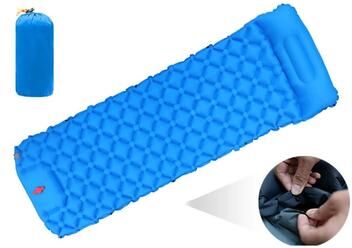
Discount Dollar Deals Self Inflating Camping Mat With Pillow Outdoor Air Mattress For Hiking Climbing blueRest easy on your outdoor adventures with the SelfInflating Camping Mat. Whether you're hiking, camping, or climbing, this inflatable air mattress provides the perfect balance of comfort and convenience. Designed for explorers who love to experience...59,97 $*Shipping: 0,00 $Secure redirect to the provider
-
What is the difference between the past participle and the present participle?
The past participle is a verb form used to indicate a completed action or state that occurred in the past. It is often used with auxiliary verbs to form the perfect tenses (e.g., "has eaten," "had gone"). The present participle, on the other hand, is a verb form used to indicate an ongoing action or state in the present or future. It is formed by adding "-ing" to the base form of the verb and is used to create the progressive tenses (e.g., "is eating," "will be going"). **
-
How can the terms premature, simultaneous, and subsequent be explained in relation to past participle, present participle, and future participle?
The terms premature, simultaneous, and subsequent can be explained in relation to past participle, present participle, and future participle based on their timing in relation to the action of the verb. The past participle refers to an action that has already been completed, making it premature in relation to the present moment. The present participle refers to an action that is happening at the same time as something else, making it simultaneous. The future participle refers to an action that will happen at a later time, making it subsequent to the present moment. These terms help to clarify the timing of the action in relation to the verb. **
-
What is a nominalized participle?
A nominalized participle is a verb form that has been turned into a noun. This is done by adding a suffix to the participle form of the verb, which allows it to function as a noun in a sentence. Nominalized participles are commonly used in various languages to express actions or qualities in a more abstract or general way. **
-
What is a substantivized participle?
A substantivized participle is a verb form that has been turned into a noun by adding a definite article and declining it for case, gender, and number. In other words, it is a participle that has been transformed into a noun and can function as a subject, object, or complement in a sentence. This process allows the participle to take on the characteristics of a noun while still retaining some of its verbal qualities. **
* All prices are inclusive of VAT and, if applicable, plus shipping costs. The offer information is based on the details provided by the respective shop and is updated through automated processes. Real-time updates do not occur, so deviations can occur in individual cases. ** Note: Parts of this content were created by AI.