Buy alpamayo.eu ?
We are moving the project
alpamayo.eu .
Are you interested in purchasing the domain
alpamayo.eu ?
domain@kv-gmbh.de · 0541-91531010
Buy alpamayo.eu ?
What is a resultant wave in physics?
In physics, a resultant wave is the combination of two or more individual waves that are superimposed on each other. When waves with different amplitudes, frequencies, or phases overlap, they create a new wave pattern known as the resultant wave. The properties of the resultant wave, such as its amplitude, frequency, and phase, are determined by the properties of the individual waves that combine to form it. Resultant waves are important in understanding phenomena such as interference, diffraction, and standing waves. **
What is the resultant of a triangular load?
The resultant of a triangular load is the single force that can replace the distributed load while producing the same effect on the structure. It is the equivalent concentrated force that acts at a specific point on the structure. The magnitude and direction of the resultant force depend on the shape and intensity of the triangular load. Calculating the resultant force is important in structural analysis to simplify the analysis of complex loads. **


Similar search terms for Resultant
Top-Angebote
Products related to Resultant:
-
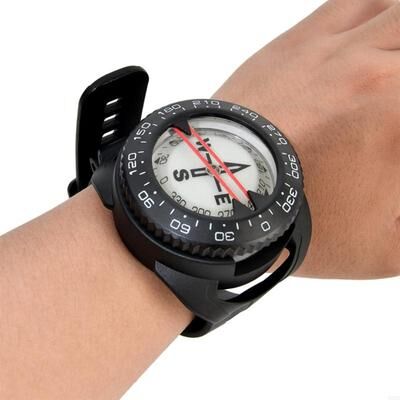
ModernMart Adventure Waterproof Compass Watch For Hiking Navigation And Outdoor Survival Adventure Waterproof Compass Watch For Hiking Navigation And Outdoor SurvivalNever lose your sense of direction, even in the wild. This compass watch is built for explorers, hikers, and outdoor enthusiasts who need reliable navigation on the go. Designed as a rugged outdoor survival watch, it combines precision direction...79,97 $*Shipping: 0,00 $Secure redirect to the provider
-
ModernMart EDC Outdoor Survival Compass Watch Bracelet For Hiking & Climbing EDC Outdoor Survival Compass Watch Bracelet For Hiking & ClimbingNever lose your way on your next adventure with the EDC Outdoor Survival Compass Watch. Designed for hikers, climbers, and outdoor enthusiasts, this compact, lightweight tool keeps you on track and on time. Its durable, waterproof design glows in...34,97 $*Shipping: 0,00 $Secure redirect to the provider
-
Perfect Picks Market Kids Explorer Kit, Bug Catcher, Binoculars, Outdoor Exploration Kit For Hiking, Camping, Educational Toy For Kids Kids Explorer Kit, Bug Catcher, Binoculars, Outdoor Exploration Kit For Hiking, Camping, Educational Toy For KidsExplore the Outdoors with the 11PCS Kids Explorer Kit The 11PCS Kids Explorer Kit with Binoculars is the perfect set for your little adventurer. Designed to spark curiosity, this bug catcher outdoor exploration kit includes everything kids need for...129,97 $*Shipping: 0,00 $Secure redirect to the provider
-
Orion Strangeworlds Travel Agency: Adventure in the Floating Mountains by L.D. Lapinski – World Book Day AdventureIt is the once-every-century Cloud-Wish Festival in the magical world of Strofadia, and Flick and Jonathan have travelled via suitcase to be a part of it.Strofadia is a land of flight and fantasy, where the people are born with wings and the great floating mountains are seen as the source of fantastic power. There are three floating mountains, with the largest being known as the home of the great Cloud Dragon - keeper of magic and granter of wishes. The people of Strofadia take their magical wishes (in the form of a physical bead-like object) to the dragon, in the hopes that the wish will be granted at the end of the festival when the dragon appears.Flick and Jonathan have fun exploring Strofadia, but when the moons rise, there is no sign of movement from the mountain.Will Flick and Jonathan be able to find out what happened to the dragon and save the festival and the land of Strofadia from disaster?A 2023 World Book Day Title0,99 £*Shipping: 1,99 £Secure redirect to the provider



-
What is the angle when two forces form a resultant?
When two forces form a resultant, the angle between the two forces can be found using the law of cosines. The angle can be calculated using the formula: cos(θ) = (F1^2 + F2^2 - R^2) / (2 * F1 * F2), where F1 and F2 are the magnitudes of the two forces and R is the magnitude of the resultant force. This angle represents the direction of the resultant force in relation to the original forces. **
-
What formula do I use to calculate the resultant force?
To calculate the resultant force, you can use the formula: Resultant force = √(Fx^2 + Fy^2) Where Fx is the force in the x-direction and Fy is the force in the y-direction. This formula is derived from the Pythagorean theorem, which states that the magnitude of the resultant force is equal to the square root of the sum of the squares of the individual forces in each direction. **
-
What is the resultant vector with two lengths and angles?
The resultant vector with two lengths and angles is the single vector that represents the combined effect of the two original vectors. To find the resultant vector, we use the parallelogram law of vector addition, which involves adding the two vectors tip to tail and then drawing the diagonal of the parallelogram formed. The length and angle of the resultant vector can be calculated using trigonometric functions such as sine and cosine. This resultant vector represents the combined effect of the original vectors in terms of both magnitude and direction. **
-
What is the graphical resultant force of more than 3 forces?
The graphical resultant force of more than 3 forces is found by using the polygon method. This method involves drawing the forces as vectors with their tails at the same point, and then completing the polygon by drawing the final side from the head of the last vector to the tail of the first vector. The resultant force is then the vector that closes the polygon. This method allows us to find the magnitude and direction of the resultant force by using vector addition. **

How do you calculate the resultant force without using the cosine law?
To calculate the resultant force without using the cosine law, you can use the Pythagorean theorem. First, you would calculate the horizontal and vertical components of the forces. Then, you would use the Pythagorean theorem to find the magnitude of the resultant force by taking the square root of the sum of the squares of the horizontal and vertical components. Finally, you can use trigonometric functions to find the direction of the resultant force. **
How do you calculate the resultant forces F1 and F2 in Newtons in physics?
To calculate the resultant forces F1 and F2 in Newtons in physics, you need to first determine the individual forces acting on an object. Once you have identified these forces, you can use vector addition to find the resultant force. This involves adding the forces together taking into account their direction and magnitude. The resultant force F1 and F2 can be calculated using the formula F = F1 + F2, where F is the resultant force. **
Top-Angebote
Products related to Resultant:
-
The Handy Homestead Survival Wrist Compass Watch For Outdoor Adventure & Hiking Survival Wrist Compass Watch For Outdoor Adventure & HikingNever lose your way on your adventures again. The wrist compass watch combines a reliable compass with a durable, lightweight design, perfect for explorers, hikers, and outdoor enthusiasts. Built for precision and convenience, it keeps you oriented...39,97 $*Shipping: 0,00 $Secure redirect to the provider
-
Uplifted Trends Premium Wrist Compass Survival Watch For Outdoor Adventure & Hiking Premium Wrist Compass Survival Watch For Outdoor Adventure & HikingNever lose your way again with the wrist compass survival watch built for adventurers and explorers. Designed for hikers, campers, and outdoor enthusiasts, this durable survival watch keeps you on track no matter where the journey takes you. Its...39,97 $*Shipping: 0,00 $Secure redirect to the provider
-
ModernMart Adventure Waterproof Compass Watch For Hiking Navigation And Outdoor Survival Adventure Waterproof Compass Watch For Hiking Navigation And Outdoor SurvivalNever lose your sense of direction, even in the wild. This compass watch is built for explorers, hikers, and outdoor enthusiasts who need reliable navigation on the go. Designed as a rugged outdoor survival watch, it combines precision direction...79,97 $*Shipping: 0,00 $Secure redirect to the provider
-
ModernMart EDC Outdoor Survival Compass Watch Bracelet For Hiking & Climbing EDC Outdoor Survival Compass Watch Bracelet For Hiking & ClimbingNever lose your way on your next adventure with the EDC Outdoor Survival Compass Watch. Designed for hikers, climbers, and outdoor enthusiasts, this compact, lightweight tool keeps you on track and on time. Its durable, waterproof design glows in...34,97 $*Shipping: 0,00 $Secure redirect to the provider
-
What is a resultant wave in physics?
In physics, a resultant wave is the combination of two or more individual waves that are superimposed on each other. When waves with different amplitudes, frequencies, or phases overlap, they create a new wave pattern known as the resultant wave. The properties of the resultant wave, such as its amplitude, frequency, and phase, are determined by the properties of the individual waves that combine to form it. Resultant waves are important in understanding phenomena such as interference, diffraction, and standing waves. **
-
What is the resultant of a triangular load?
The resultant of a triangular load is the single force that can replace the distributed load while producing the same effect on the structure. It is the equivalent concentrated force that acts at a specific point on the structure. The magnitude and direction of the resultant force depend on the shape and intensity of the triangular load. Calculating the resultant force is important in structural analysis to simplify the analysis of complex loads. **
-
What is the angle when two forces form a resultant?
When two forces form a resultant, the angle between the two forces can be found using the law of cosines. The angle can be calculated using the formula: cos(θ) = (F1^2 + F2^2 - R^2) / (2 * F1 * F2), where F1 and F2 are the magnitudes of the two forces and R is the magnitude of the resultant force. This angle represents the direction of the resultant force in relation to the original forces. **
-
What formula do I use to calculate the resultant force?
To calculate the resultant force, you can use the formula: Resultant force = √(Fx^2 + Fy^2) Where Fx is the force in the x-direction and Fy is the force in the y-direction. This formula is derived from the Pythagorean theorem, which states that the magnitude of the resultant force is equal to the square root of the sum of the squares of the individual forces in each direction. **
Similar search terms for Resultant
-
Perfect Picks Market Kids Explorer Kit, Bug Catcher, Binoculars, Outdoor Exploration Kit For Hiking, Camping, Educational Toy For Kids Kids Explorer Kit, Bug Catcher, Binoculars, Outdoor Exploration Kit For Hiking, Camping, Educational Toy For KidsExplore the Outdoors with the 11PCS Kids Explorer Kit The 11PCS Kids Explorer Kit with Binoculars is the perfect set for your little adventurer. Designed to spark curiosity, this bug catcher outdoor exploration kit includes everything kids need for...129,97 $*Shipping: 0,00 $Secure redirect to the provider
-
Orion Strangeworlds Travel Agency: Adventure in the Floating Mountains by L.D. Lapinski – World Book Day AdventureIt is the once-every-century Cloud-Wish Festival in the magical world of Strofadia, and Flick and Jonathan have travelled via suitcase to be a part of it.Strofadia is a land of flight and fantasy, where the people are born with wings and the great floating mountains are seen as the source of fantastic power. There are three floating mountains, with the largest being known as the home of the great Cloud Dragon - keeper of magic and granter of wishes. The people of Strofadia take their magical wishes (in the form of a physical bead-like object) to the dragon, in the hopes that the wish will be granted at the end of the festival when the dragon appears.Flick and Jonathan have fun exploring Strofadia, but when the moons rise, there is no sign of movement from the mountain.Will Flick and Jonathan be able to find out what happened to the dragon and save the festival and the land of Strofadia from disaster?A 2023 World Book Day Title0,99 £*Shipping: 1,99 £Secure redirect to the provider
-
Uplift Essentials Parrot Rope Climbing Net Toy Hemp Gnawing And Adventure Play Net Parrot Rope Climbing Net Toy Hemp Gnawing And Adventure Play NetGive your bird a fun, active way to climb, explore, and stay entertained with this parrot rope climbing net toy. Designed as a 3D adventure space, the woven net allows parrots to jump, hang, and shuttle through it, helping prevent boredom while...55,97 $*Shipping: 0,00 $Secure redirect to the provider
-
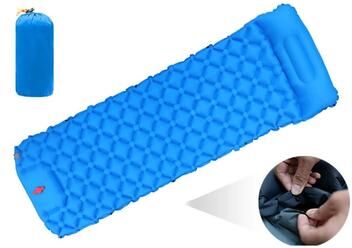
Discount Dollar Deals Self Inflating Camping Mat With Pillow Outdoor Air Mattress For Hiking Climbing blueRest easy on your outdoor adventures with the SelfInflating Camping Mat. Whether you're hiking, camping, or climbing, this inflatable air mattress provides the perfect balance of comfort and convenience. Designed for explorers who love to experience...59,97 $*Shipping: 0,00 $Secure redirect to the provider
-
What is the resultant vector with two lengths and angles?
The resultant vector with two lengths and angles is the single vector that represents the combined effect of the two original vectors. To find the resultant vector, we use the parallelogram law of vector addition, which involves adding the two vectors tip to tail and then drawing the diagonal of the parallelogram formed. The length and angle of the resultant vector can be calculated using trigonometric functions such as sine and cosine. This resultant vector represents the combined effect of the original vectors in terms of both magnitude and direction. **
-
What is the graphical resultant force of more than 3 forces?
The graphical resultant force of more than 3 forces is found by using the polygon method. This method involves drawing the forces as vectors with their tails at the same point, and then completing the polygon by drawing the final side from the head of the last vector to the tail of the first vector. The resultant force is then the vector that closes the polygon. This method allows us to find the magnitude and direction of the resultant force by using vector addition. **
-
How do you calculate the resultant force without using the cosine law?
To calculate the resultant force without using the cosine law, you can use the Pythagorean theorem. First, you would calculate the horizontal and vertical components of the forces. Then, you would use the Pythagorean theorem to find the magnitude of the resultant force by taking the square root of the sum of the squares of the horizontal and vertical components. Finally, you can use trigonometric functions to find the direction of the resultant force. **
-
How do you calculate the resultant forces F1 and F2 in Newtons in physics?
To calculate the resultant forces F1 and F2 in Newtons in physics, you need to first determine the individual forces acting on an object. Once you have identified these forces, you can use vector addition to find the resultant force. This involves adding the forces together taking into account their direction and magnitude. The resultant force F1 and F2 can be calculated using the formula F = F1 + F2, where F is the resultant force. **
* All prices are inclusive of VAT and, if applicable, plus shipping costs. The offer information is based on the details provided by the respective shop and is updated through automated processes. Real-time updates do not occur, so deviations can occur in individual cases. ** Note: Parts of this content were created by AI.